

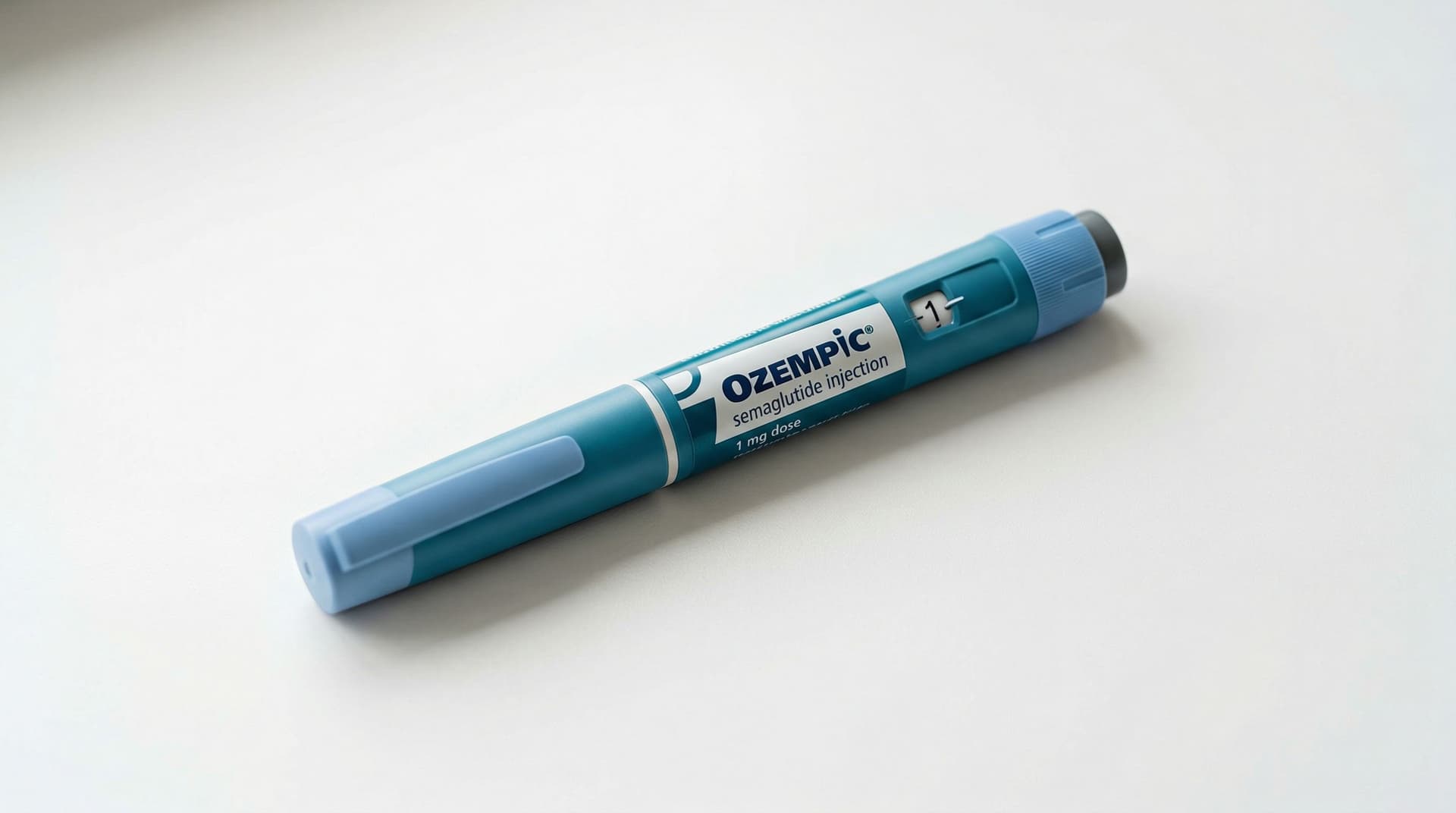
Tirzepatide wins on raw weight loss (22.5% body weight at 72 weeks in SURMOUNT-1 vs ~15% for semaglutide at 68 weeks in STEP-1) and works through two pathways instead of one. Semaglutide wins on real-world track record (FDA-approved 2017 for diabetes, 2021 for obesity), broader insurance coverage, and the only oral GLP-1 pill option (Rybelsus). For most cash-pay patients in June 2026, the cheapest legitimate path is compounded — Embody at $69/month for either molecule, Yucca Health at $146/month, or TrimRx at $199/month flat (Highest Rated). Here's the molecule-by-molecule head-to-head: how they work, the trial data side by side, side effect profiles, and the cheapest legitimate path for each by your insurance and budget.
Quick answer: which should you pick?
| Your situation | Pick | Cheapest path |
|---|---|---|
| Maximum weight loss, no clinical reason to favor sema | Tirzepatide | Embody $69/mo compounded; or Zepbound Savings Card $25/mo if insured |
| Commercially insured + Type 2 diabetes | Semaglutide (Ozempic) | Ozempic Savings Card $25/mo |
| Commercially insured + obesity, no T2D | Either, based on what's on formulary | Wegovy or Zepbound Savings Card at $25/mo |
| Medicare Part D + qualifying conditions | Either | Medicare Bridge $50/mo (Wegovy, Zepbound, or Foundayo) |
| Cash-pay, prefer oral over injection | Semaglutide (Rybelsus tablets or Foundayo oral) | Foundayo $149/mo |
| Cash-pay, want lowest cost | Either (same compounded price floor) | Embody $69/mo |
| History of bad GI side effects on semaglutide | Tirzepatide | Same-molecule continuation via TrimRx or Yucca |
How they actually work: mechanism difference matters
Semaglutide is a single-receptor agonist. It binds the GLP-1 receptor only, mimicking glucagon-like peptide-1 — a gut hormone released after eating that slows stomach emptying, signals fullness to the brain, and triggers insulin release. Half-life is roughly 1 week (weekly injection works).
Tirzepatide is a dual-receptor agonist. It binds both the GLP-1 receptor AND the GIP (glucose-dependent insulinotropic polypeptide) receptor. GIP is a second incretin hormone with effects on insulin secretion, fat metabolism, and (debated) appetite. The dual mechanism explains why tirzepatide produces meaningfully more weight loss in head-to-head trials.
Why this matters clinically: if semaglutide didn't work for you, tirzepatide may — it recruits a separate pathway. If semaglutide worked but you plateaued, escalating to tirzepatide is a defensible next step.
Weight loss: trial data side by side
| Trial | Drug | Dose | Body weight loss | Duration |
|---|---|---|---|---|
| STEP-1 (2021) | Semaglutide | 2.4 mg/wk | 14.9% | 68 weeks |
| STEP-3 (2021) | Semaglutide + lifestyle | 2.4 mg/wk | 16.0% | 68 weeks |
| SURMOUNT-1 (2022) | Tirzepatide | 15 mg/wk | 22.5% | 72 weeks |
| SURMOUNT-3 (2023) | Tirzepatide | 15 mg/wk | 21.1% (after lifestyle) | 72 weeks |
| SURMOUNT-5 (2025) | Tirzepatide vs semaglutide head-to-head | 15 mg vs 2.4 mg | 20.2% vs 13.7% | 72 weeks |
The SURMOUNT-5 head-to-head (published 2025) is the cleanest comparison: same population, same trial design, both drugs at their FDA-approved max doses for obesity. Tirzepatide produced about 47% more weight loss in absolute terms.
Caveat: trial averages are not your personal result. Both molecules have a long tail — some patients on semaglutide lose >20%, some patients on tirzepatide lose <10%. Genetics, baseline metabolism, dose tolerance, and lifestyle adherence all matter more than which molecule you chose.
Side effects: more similar than different (with one exception)
Both molecules share the same GI-dominant side effect profile because they share the GLP-1 mechanism: nausea, diarrhea, constipation, vomiting, decreased appetite. Most are dose-dependent and resolve as you titrate up slowly.
Where they differ:
- Constipation: somewhat more common on tirzepatide (the GIP receptor effects on gut motility appear additive).
- Severe nausea requiring discontinuation: roughly comparable across trials (4-7% on both at top dose).
- Injection site reactions: equivalent.
- Rare but serious: both carry boxed warnings for thyroid C-cell tumors (rodent data; human risk unestablished). Both should be avoided with personal/family history of medullary thyroid carcinoma or MEN 2 syndrome.
For a deeper safety read, see our Ozempic long-term safety analysis — the cardiovascular and kidney protection data applies meaningfully to both molecules.
Brand names: who makes what
| Brand | Molecule | Manufacturer | FDA indication | Form |
|---|---|---|---|---|
| Ozempic | Semaglutide | Novo Nordisk | Type 2 diabetes | Weekly injection |
| Wegovy | Semaglutide | Novo Nordisk | Obesity | Weekly injection + daily tablet |
| Rybelsus | Semaglutide | Novo Nordisk | Type 2 diabetes | Daily oral pill |
| Mounjaro | Tirzepatide | Eli Lilly | Type 2 diabetes | Weekly injection |
| Zepbound | Tirzepatide | Eli Lilly | Obesity | Weekly injection + KwikPen + daily tablet |
Practical implication: if your prescriber wrote you a tirzepatide prescription for weight loss, the on-label version is Zepbound (not Mounjaro). If they wrote Mounjaro off-label, see our Mounjaro for weight loss guide for the cost optimization paths. If they wrote semaglutide for weight loss, the on-label version is Wegovy (not Ozempic).
Cost comparison: every legitimate path in June 2026
Semaglutide paths
| Source | Monthly cost | Eligibility |
|---|---|---|
| Ozempic Savings Card | $25/mo | Commercial insurance + Type 2 diabetes |
| Wegovy Savings Card | $25/mo | Commercial insurance + Wegovy on formulary |
| Medicare Bridge (Wegovy) | $50/mo from Jul 1 | Part D + qualifying tier |
| NovoCare cash-pay (Wegovy) | $249/mo | None — direct from Novo |
| Compounded semaglutide | $99-$249/mo | Cash-pay, no diagnosis required |
| Foundayo (oral, same drug class) | $149/mo | Telehealth prescription |
| Brand Wegovy retail | $1,349/mo | Cash, no programs applied |
| Brand Ozempic retail | $998/mo | Cash, no programs applied |
Full breakdown: How to Get Wegovy Cheaper and Cheapest Compounded Semaglutide.
Tirzepatide paths
| Source | Monthly cost | Eligibility |
|---|---|---|
| Mounjaro Savings Card | $25/mo | Commercial insurance + Type 2 diabetes |
| Zepbound Savings Card | $25/mo | Commercial insurance + Zepbound on formulary |
| Medicare Bridge (Zepbound) | $50/mo from Jul 1 | Part D + qualifying tier |
| LillyDirect Zepbound vials | $349-$549/mo | None — direct from Lilly |
| Compounded tirzepatide | $99-$249/mo | Cash-pay, no diagnosis required |
| Brand Zepbound retail | $1,089/mo | Cash, no programs applied |
| Brand Mounjaro retail | $1,069/mo | Cash, no programs applied |
Full breakdown: How to Get Zepbound Cheaper, Cheapest Compounded Tirzepatide, and Mounjaro Off-Label Weight Loss.
Key observation: at the compounded floor, both molecules are priced identically ($99-$249/mo depending on provider). Cost is no longer a tiebreaker between sema and tirz for cash-pay patients. The real decision is which molecule clinically fits, which provider you trust, and whether your insurance unlocks a brand savings card path.
Which compounded providers offer what?
All six tracked programs offer both semaglutide and tirzepatide (with one exception). Ranked commission-first:
- TrimRx — Highest Rated. Semaglutide $199/mo, tirzepatide $299/mo. Flat all-inclusive pricing at any dose. Best for switchers.
- Yucca Health. Semaglutide $146/mo on 6-month plan, tirzepatide $258/mo on 6-month plan. Best price-to-credentialing balance.
- MyStart Health. Semaglutide $224/mo with code SELFLOVE25. Brand pathway built-in if you ever want to switch back to Ozempic/Wegovy/Mounjaro/Zepbound.
- MEDVi. Semaglutide $179 first month, $299 refills. Lowest entry point.
- Embody. Semaglutide $99/mo (injection), tirzepatide $149/mo. Cheapest floor; oral GLP-1 gum option for needle-averse patients.
- SkinnyRx. Semaglutide $199/mo (last published standing rate; SkinnyRx currently advertises only a $99 first month with no renewal price), tirzepatide $299/mo (last published). Multi-format delivery (injection, drops, lozenges, tablets).
For the full compounded grid see our cheapest compounded semaglutide ranking and cheapest compounded tirzepatide ranking.
Regulatory caveat: the FDA's June 29 compounded comment period
If you're choosing between brand and compounded right now, you should know: the FDA proposed on May 1, 2026 to permanently exclude semaglutide, tirzepatide, and liraglutide from the 503B Bulks List. The comment period closes June 29, 2026 (13 days from today). If finalized, 503B large-batch compounding ends — 503A patient-specific compounding continues under separate rules.
Practical implication for the sema-vs-tirz decision: the regulatory risk is identical for both molecules — the proposed rule covers them equally. Don't pick semaglutide hoping it'll dodge enforcement; the FDA is treating them as a class.
Full analysis: FDA 503B Compounded Ban Explainer.
Switching molecules: dose conversion
If you've been on semaglutide and want to try tirzepatide (or vice versa), the molecules are not interchangeable mg-for-mg. Standard transition protocol:
Semaglutide → Tirzepatide. Start at tirzepatide 2.5 mg/week (the standard starter dose) even if you were at semaglutide max (2.4 mg). Tirzepatide's titration is faster (every 4 weeks) but each step is a meaningful jump. Most patients reach 7.5-10 mg before deciding whether to escalate further.
Tirzepatide → Semaglutide. Same logic in reverse. Start semaglutide at 0.25 mg/week regardless of your prior tirzepatide dose. The receptors and tolerability profile reset.
Same-molecule continuation (e.g., brand Ozempic to compounded semaglutide): 1:1 mg conversion, no titration restart. See our switching guide for the full Ozempic-to-compounded protocol — the same logic applies to brand-to-compounded transitions for tirzepatide.
Decision matrix: pick the right molecule for your situation
You have Type 2 diabetes and commercial insurance: Semaglutide via Ozempic Savings Card ($25/mo) — broadest insurance coverage, 7+ years of T2D data. If A1C isn't controlling on max semaglutide, talk to your prescriber about switching to tirzepatide via Mounjaro Savings Card (also $25/mo).
You have obesity and your plan covers Wegovy OR Zepbound: Pick whichever is on your formulary. Both Savings Cards drop you to $25/mo. Most plans cover one but not both.
You're cash-pay and want maximum weight loss: Tirzepatide via compounded (Embody $149/mo, Yucca $258/mo on 6-month, TrimRx $299/mo flat).
You're cash-pay and want the lowest monthly cost: Either molecule via Embody at $69/mo for semaglutide or $149/mo for tirzepatide — same provider, same credentialing tier, you choose the molecule.
You're cash-pay and need an oral option: Semaglutide via Foundayo $149/mo, Wegovy tablets at $1,349 retail ($25 with insurance), or Rybelsus daily pill. No oral tirzepatide on the market yet (Lilly's orforglipron is a separate molecule that just launched — see our Foundayo launch post).
You're on Medicare Part D and qualify for the Bridge Program: Either molecule via Wegovy or Zepbound at $50/mo from July 1. See our Medicare Bridge enrollment guide for the tier requirements.
FAQ
Is tirzepatide better than semaglutide for weight loss? At their FDA-approved max doses (15 mg tirzepatide vs 2.4 mg semaglutide), tirzepatide produces more weight loss on average — about 20% vs 14% in SURMOUNT-5's head-to-head trial. Individual results vary significantly.
Can I switch from semaglutide to tirzepatide? Yes. Start at tirzepatide 2.5 mg/week regardless of your prior semaglutide dose. Most prescribers titrate every 4 weeks based on tolerance and weight response.
Is compounded tirzepatide as effective as Mounjaro/Zepbound? The active molecule is the same. Clinical effect depends on dose, adherence, and titration — not on whether the pharmacy is Eli Lilly or a US 503A compounder. Real-world adherence is often higher on compounded programs because the cost barrier is lower.
Which has worse side effects? Very similar profiles (both GLP-1-driven). Tirzepatide has slightly higher rates of constipation; semaglutide and tirzepatide are roughly equivalent on nausea, diarrhea, vomiting, and injection site reactions.
Is one safer for long-term use? Both have boxed warnings for thyroid C-cell tumors (rodent data; human risk unestablished). Both have cardiovascular outcome trials showing benefit in their respective populations. The 90,000-patient long-term data we cover in our Ozempic long-term safety analysis applies meaningfully to both molecules.
What about Foundayo (orforglipron)? Foundayo is a third molecule — a small-molecule oral GLP-1 receptor agonist from Eli Lilly. Not a tirzepatide or semaglutide; a separate drug. Roughly 15% body weight loss in trials (between semaglutide and tirzepatide). Launched April 2026 at $149/mo cash-pay. See our Foundayo launch post for the full breakdown.
Will FDA pull compounded tirzepatide or semaglutide first? The FDA's May 2026 proposal treats both molecules identically — comment period closes June 29, 2026, with a final rule expected late 2026 at the earliest. Neither molecule has a regulatory edge over the other for compounded patients.
For our full provider grid see the cheapest GLP-1 programs page. For the long-term cardiovascular and kidney case for staying on a GLP-1, see our 90,000-patient analysis. For switching from brand to compounded, see our step-by-step switching guide.