How Do GLP-1 Drugs Work? A Simple Explanation
GLP-1 medications have become the most significant development in obesity treatment in decades. But how do they actually work? This guide breaks down the science in plain language — from the gut hormone they mimic to the brain signals they quiet — so you can make informed decisions about your health.


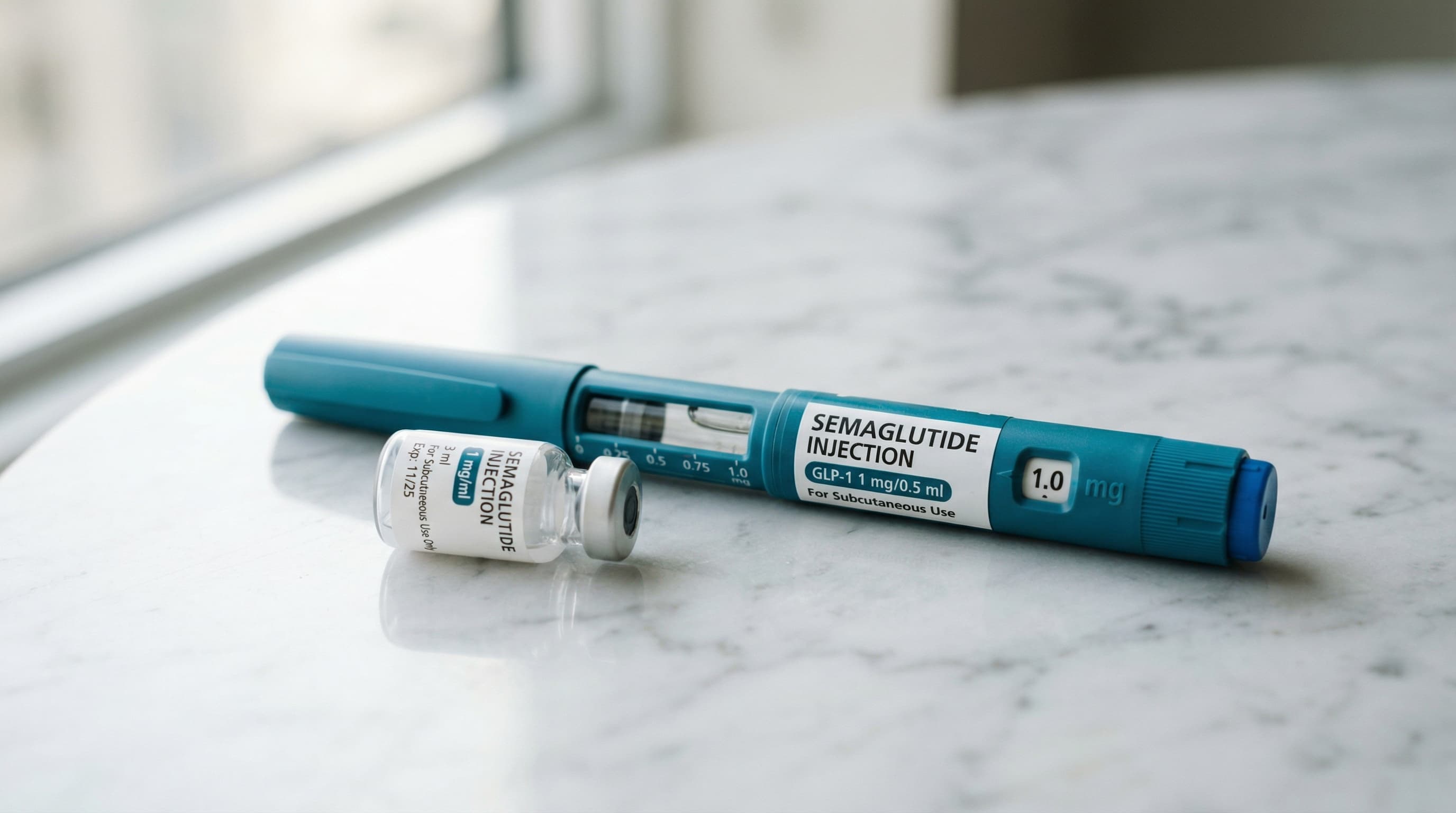
How GLP-1 Drugs Work: The Quick Version
What Is GLP-1? The Natural Hormone
GLP-1 stands for Glucagon-Like Peptide-1. It is a hormone that your body produces naturally. Every time you eat, specialized cells in your small intestine (called L-cells) release GLP-1 into your bloodstream. It is part of a family of hormones called incretins, which coordinate your body's response to food.
Natural GLP-1 does several things simultaneously:
- Signals your pancreas to release insulin (lowering blood sugar)
- Tells your brain that you are eating and beginning to feel satisfied
- Slows down how quickly food moves through your stomach
- Reduces glucagon release (a hormone that raises blood sugar)
Here is the catch: natural GLP-1 has a very short lifespan. An enzyme called DPP-4 breaks it down within 2-3 minutes of release. So while your body makes GLP-1 constantly during meals, each molecule only works for a few minutes before being destroyed.
In people with obesity, research has shown that the GLP-1 system is often blunted — they produce less GLP-1 in response to meals, or their brain is less responsive to its signals. This contributes to the persistent hunger and overeating that characterizes obesity.
The Gila Monster Connection
The first GLP-1 drug (exenatide/Byetta) was developed from a protein found in the saliva of the Gila monster, a venomous lizard. Scientists discovered that this protein, called exendin-4, acted like GLP-1 but lasted much longer in the bloodstream. This discovery launched the entire GLP-1 drug class.
How GLP-1 Drugs Mimic This Hormone
GLP-1 receptor agonists (the medical term for these drugs) are synthetic versions of GLP-1 that have been engineered to last much longerthan the natural hormone. While your body's own GLP-1 lasts 2-3 minutes, the drugs in this class last for days.
The key innovation was structural modification. Scientists altered the amino acid sequence of GLP-1 so that DPP-4 (the enzyme that breaks it down) cannot recognize and destroy it. They also attached the molecule to albumin (a blood protein), which acts as a carrier and further extends its lifespan.
The result: a single weekly injection of semaglutide maintains elevated GLP-1 receptor activation for an entire week. Compare that to the 2-3 minutes of natural GLP-1. This constant stimulation is what produces the dramatic effects on appetite, blood sugar, and weight.
Think of it this way: natural GLP-1 is like a flickering light that turns on briefly after meals. GLP-1 drugs are like a steady lamp that stays on 24/7. The brain receives a continuous signal that you are satisfied, even between meals.
Slowing Stomach Emptying: Why You Feel Full
One of the most noticeable effects of GLP-1 drugs is how long you feel full after eating. This is not a placebo effect — it is a measurable physiological change called delayed gastric emptying.
Normally, your stomach empties about 50% of a meal within 2-3 hours. On GLP-1 medication, this can stretch to 4-5 hours or longer. Food physically stays in your stomach for an extended period, sending continuous "I am still digesting" signals to your brain.
This effect is responsible for several common patient experiences:
- Eating smaller portions: You feel full faster because your stomach is still partially full from the previous meal
- Reduced snacking: The between-meal hunger that drives snacking is significantly diminished
- Changing food preferences: Many patients report reduced interest in high-fat and high-sugar foods, which may relate to slower processing of these items
- Nausea (side effect): The delayed emptying is also why nausea is the most common side effect — food sitting in the stomach longer can trigger discomfort, especially early in treatment
Why Dose Titration Matters
GLP-1 medications start at a low dose and gradually increase over 4-5 months. This is specifically to let your stomach adapt to the delayed emptying. Starting at full dose would cause severe nausea in most patients. The gradual increase gives your GI tract time to adjust.
Quieting the Brain: The "Food Noise" Effect
Perhaps the most profound effect of GLP-1 drugs — and the one patients talk about most — is what happens in the brain. Patients consistently describe a dramatic reduction in what has become known as "food noise": the constant, intrusive thoughts about food that characterize life with obesity.
GLP-1 receptors exist throughout the brain, particularly in the hypothalamus(which regulates hunger and energy balance) and the mesolimbic reward system(which drives cravings and reward-seeking behavior). When GLP-1 drugs activate these receptors, two things happen:
1. Appetite Center Suppression
In the hypothalamus, GLP-1 receptor activation reduces the production of neuropeptide Yand AgRP — two proteins that are powerful appetite stimulators. Simultaneously, it increases POMC signaling, which promotes satiety. The net effect is a fundamental reduction in baseline hunger. You simply do not think about food as much.
2. Reward Pathway Modulation
In the reward system, GLP-1 activation reduces the dopamine response to food cues. In people with obesity, brain imaging studies show hyperactivation of reward circuits when seeing or smelling food. GLP-1 drugs normalize this response. Patients describe it as: "I can see a pizza and feel nothing" or "I forgot to eat lunch."
This reward pathway effect is also why researchers are studying GLP-1 drugs for alcohol use disorder, gambling addiction, and other compulsive behaviors. The same reward circuit modulation that quiets food cravings may reduce other compulsive urges — though this research is still in early stages.
What "Food Noise" Actually Means
Food noise is not a medical term — it was coined by patients to describe the constant mental preoccupation with food: planning the next meal while still eating, feeling compelled to eat even when full, thinking about snacks throughout the day. GLP-1 drugs reduce this by acting directly on the brain circuits responsible for these thoughts. For many patients, this cognitive relief is even more life-changing than the weight loss itself.
Improving Insulin Sensitivity
GLP-1 drugs were originally developed for type 2 diabetes, and their effect on blood sugar remains a core mechanism. Here is how it works:
When blood sugar rises after a meal, GLP-1 receptor activation causes the pancreas to release more insulin. Crucially, this is glucose-dependent — the drug only stimulates insulin release when blood sugar is elevated. When blood sugar is normal, the effect is minimal. This glucose-dependent mechanism is why GLP-1 drugs carry a much lower risk of hypoglycemia (dangerously low blood sugar) compared to older diabetes medications like sulfonylureas.
GLP-1 drugs also suppress glucagon, a hormone that tells the liver to release stored sugar into the bloodstream. By reducing glucagon, GLP-1 drugs prevent the liver from overproducing glucose — a key driver of high fasting blood sugar in type 2 diabetes.
Beyond direct pancreatic effects, the weight loss itself improves insulin sensitivity. Losing 10-15% of body weight can dramatically reduce insulin resistance, and some patients on GLP-1 medications see their type 2 diabetes go into complete remission.
Benefits Beyond Weight Loss
Research has revealed that GLP-1 drugs have effects on multiple organ systems beyond weight loss and blood sugar control. Some of these are well-established; others are still under investigation.
Heart Health
The SELECT trial proved semaglutide reduces major cardiovascular events (heart attack, stroke, cardiovascular death) by 20% in people with obesity. This is independent of weight loss — the drug has direct anti-inflammatory effects on blood vessels. Semaglutide (as Wegovy) now has an FDA-approved cardiovascular indication.
Liver Health
GLP-1 drugs significantly reduce liver fat in patients with MASLD (metabolic dysfunction-associated steatotic liver disease, formerly NAFLD). Semaglutide has shown a 37% resolution rate for MASH (the more advanced inflammatory form) in clinical trials, and resmetirom + semaglutide combinations are being studied as first-line MASH therapy.
Sleep Apnea
The SURMOUNT-OSA trials demonstrated that tirzepatide reduced the severity of obstructive sleep apnea (OSA) by up to 63%, with many patients no longer meeting criteria for moderate-severe OSA. This is partly due to weight loss reducing neck fat, and partly due to potential direct effects on upper airway muscle tone.
Kidney Protection
The FLOW trial showed semaglutide reduced the progression of chronic kidney disease by 24% in patients with type 2 diabetes. GLP-1 drugs appear to reduce kidney inflammation and fibrosis independently of their blood sugar effects. This has led to an expanded FDA indication for kidney protection.
Brain and Cognitive Health (Under Study)
Early-stage research is investigating GLP-1 drugs for Alzheimer's disease and neurodegeneration. GLP-1 receptors in the brain are involved in neuronal survival and inflammation reduction. The EVOKE trial is testing semaglutide for early Alzheimer's, with results expected in 2026-2027.
The Full Mechanism: A Visual Overview
GLP-1 drugs work simultaneously on multiple systems. Here is a simplified overview of all the pathways involved:
GLP-1 Drug Mechanism: Four Key Pathways
Activates GLP-1 receptors in the hypothalamus and reward centers. Reduces hunger signals, suppresses food noise, and decreases dopamine-driven cravings. This is the primary driver of reduced food intake.
Slows gastric emptying by 30-50%. Food stays in the stomach longer, sending prolonged fullness signals via the vagus nerve. Results in smaller portions and less frequent eating.
Stimulates glucose-dependent insulin secretion and suppresses glucagon release. Lowers blood sugar after meals without risk of hypoglycemia. May preserve beta-cell function over time.
Reduces hepatic glucose production and liver fat accumulation. Improves lipid metabolism (lower triglycerides, lower VLDL). Reduces inflammation markers throughout the body.
Comparing the Major GLP-1 Drugs
Not all GLP-1 drugs are the same. They differ in their receptor targets, efficacy, dosing, and approved indications. Here is how the main players compare as of April 2026:
| Drug | Active Ingredient | Targets | Avg. Weight Loss | Dosing |
|---|---|---|---|---|
| Wegovy | Semaglutide 2.4mg | GLP-1 | 15-17% | Weekly injection |
| Ozempic | Semaglutide 0.5-2mg | GLP-1 | 10-14% | Weekly injection |
| Zepbound | Tirzepatide | GLP-1 + GIP | 18-22% | Weekly injection |
| Mounjaro | Tirzepatide | GLP-1 + GIP | 15-20% | Weekly injection |
| Rybelsus | Oral semaglutide 14mg | GLP-1 | 8-12% | Daily pill |
| Saxenda | Liraglutide 3mg | GLP-1 | 5-8% | Daily injection |
Semaglutide (Ozempic / Wegovy / Rybelsus)
Semaglutide is the most widely known GLP-1 drug. Developed by Novo Nordisk, it targets only the GLP-1 receptor. Ozempic is the diabetes-approved formulation (lower doses), while Wegovy is the obesity-approved formulation (2.4mg). Rybelsus is the oral version approved for diabetes. They are all the same molecule at different doses and delivery methods.
Tirzepatide (Mounjaro / Zepbound)
Tirzepatide, made by Eli Lilly, is a dual agonist — it activates both the GLP-1 receptor and the GIP (glucose-dependent insulinotropic polypeptide) receptor. This dual action is believed to explain its greater weight loss efficacy (18-22% vs. 15-17% for semaglutide). Mounjaro is the diabetes brand; Zepbound is the obesity brand.
Liraglutide (Saxenda / Victoza)
Liraglutide was the first GLP-1 approved for obesity (as Saxenda in 2014). It is a daily injection with more modest weight loss (5-8% of body weight). It has largely been superseded by semaglutide and tirzepatide but remains available and is sometimes used when the newer drugs are unavailable or contraindicated.
Orforglipron — The Next Oral Contender
Eli Lilly's orforglipron is a non-peptide oral GLP-1 that does not require an empty stomach, potentially making it the most convenient option yet. It is currently in Phase 3 trials with an FDA decision expected in 2026. Read our full orforglipron FDA decision analysis for the latest timeline and clinical data.
Frequently Asked Questions
How long does it take for GLP-1 drugs to start working?
What is the difference between GLP-1 and GIP?
Do GLP-1 drugs work for everyone?
Is food noise a real medical phenomenon?
Can GLP-1 drugs help with alcohol cravings?
Why do GLP-1 drugs cause nausea?
What is the newest GLP-1 drug in development?
Are GLP-1 drugs safe long-term?
Sources & References
- Drucker DJ. "GLP-1 receptor agonists: beyond diabetes." Nature Reviews Drug Discovery. 2023.
- Wilding JPH, et al. "Once-weekly semaglutide in adults with overweight or obesity (STEP 1)." NEJM. 2021.
- Jastreboff AM, et al. "Tirzepatide once weekly for the treatment of obesity (SURMOUNT-1)." NEJM. 2022.
- Lincoff AM, et al. "Semaglutide and cardiovascular outcomes in obesity (SELECT)." NEJM. 2023.
- Perkovic V, et al. "Semaglutide and kidney outcomes in type 2 diabetes (FLOW)." NEJM. 2024.
- Malhotra A, et al. "Tirzepatide for the treatment of obstructive sleep apnea (SURMOUNT-OSA)." NEJM. 2024.
- Newsome PN, et al. "Semaglutide for the treatment of NASH (STEP-NASH)." NEJM. 2024.
- van Bloemendaal L, et al. "GLP-1 receptor activation modulates appetite- and reward-related brain areas." Diabetes. 2014.
Ready to Explore GLP-1 Treatment?
We independently review GLP-1 telehealth providers on cost, safety, and legitimacy. Compare your options with our unbiased rankings.