

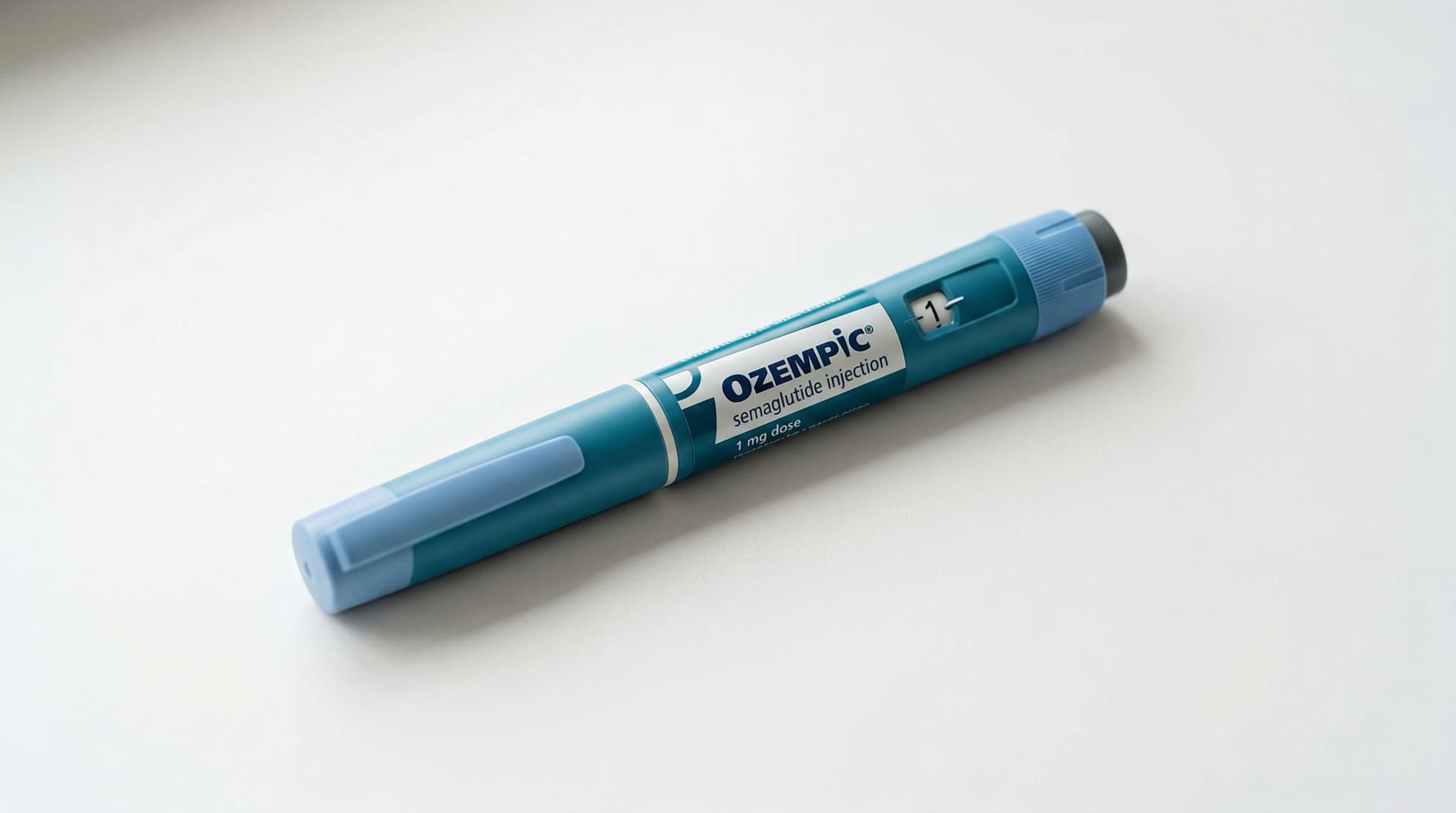
Yes, GLP-1s like Ozempic, Wegovy, Mounjaro, and Zepbound work for PCOS — they directly target the insulin resistance that drives PCOS weight gain, irregular cycles, hirsutism, and acne. Small randomized trials show 6-13% body weight loss, restored ovulation in roughly half of anovulatory patients, and meaningful drops in fasting insulin within 12-16 weeks. The catch: no GLP-1 is FDA-approved for PCOS, so insurance almost always denies without a separate Type 2 diabetes or obesity ICD-10 code on file. Cash-pay brand Ozempic is $998/month. For PCOS patients without a qualifying code, the four legitimate cheaper paths in June 2026 are compounded semaglutide via Embody at $69/month, Yucca Health at $146/month, TrimRx at $199/month (Highest Rated), or MyStart Health at $224/month with code SELFLOVE25 (brand-pathway built-in). Here's how GLP-1s work for PCOS specifically, the trial data, the insurance loopholes, and the dose-conversion logic if you're stacking with metformin.
Quick answer: which path fits your situation?
| Your situation | Cheapest legitimate path | Monthly cost |
|---|---|---|
| BMI ≥30 (with or without PCOS) | Wegovy or Zepbound Savings Card via prescriber | $25/mo |
| BMI 27-29 + PCOS-related comorbidity (T2D, hypertension, dyslipidemia, sleep apnea) | Wegovy or Zepbound Savings Card via prescriber | $25/mo |
| BMI <30, no qualifying comorbidity, cash-pay | Embody compounded semaglutide | $99/mo |
| BMI <30, want maximum weight loss | Embody compounded tirzepatide | $149/mo |
| Want a US-credentialed program with brand pathway later | TrimRx or MyStart Health | $199-$224/mo |
| Already on metformin, want to stack | Add compounded semaglutide via Yucca Health | $146/mo |
| Prefer oral over injection | Foundayo (orforglipron, daily pill) | $149/mo |
Why GLP-1s work for PCOS: the insulin-resistance link
Polycystic ovary syndrome affects roughly 6-12% of reproductive-age women in the US. Despite the name, the core metabolic driver isn't ovarian — it's insulin resistance. Up to 70% of PCOS patients have measurable insulin resistance regardless of BMI, and that hyperinsulinemia is what drives the downstream features:
- Excess ovarian androgens (testosterone, DHEA-S) — high insulin signals ovaries to overproduce androgens, causing hirsutism, acne, and male-pattern hair thinning.
- Anovulation — high androgens disrupt follicle maturation, leading to irregular or absent periods.
- Stubborn weight gain — high insulin promotes fat storage (especially visceral) and blunts satiety signaling.
- Elevated T2D risk — PCOS patients have ~4× higher lifetime risk of Type 2 diabetes.
GLP-1 receptor agonists like semaglutide and tirzepatide directly improve insulin sensitivity, slow gastric emptying (smoothing out post-meal glucose spikes), reduce hepatic insulin output, and lower appetite. In other words: GLP-1s hit PCOS at the metabolic root rather than at any individual symptom.
This is why metformin (which works on insulin sensitivity through a different mechanism) has been the PCOS off-label workhorse for decades — and why GLP-1s are now displacing or stacking with metformin in PCOS practice.
Trial data: what we actually know about GLP-1s for PCOS
GLP-1s are not FDA-approved for PCOS, so the trial base is smaller than for diabetes or obesity. But the existing randomized data is consistent and clinically meaningful:
| Trial | Drug | N | Duration | Result |
|---|---|---|---|---|
| Jensterle 2014 | Liraglutide vs metformin | 30 | 12 weeks | Liraglutide ~6 kg loss vs ~2 kg metformin |
| Salamun 2018 | Semaglutide vs liraglutide | 30 | 16 weeks | Semaglutide superior weight loss + menstrual regularity |
| Frias 2022 (sub-analysis) | Tirzepatide in T2D + PCOS subgroup | — | 40 weeks | ~13-15% body weight loss; A1C and testosterone both fell |
| Carmina 2024 (observational) | Semaglutide in PCOS | 56 | 32 weeks | 8.7% weight loss, 38% restored ovulation, fasting insulin -42% |
The pattern across studies: 6-13% body weight loss over 12-40 weeks, fasting insulin drops 30-50%, free testosterone drops 15-30%, and roughly 40-60% of previously anovulatory women resume regular cycles within 6 months.
Important caveats: these are small trials, mostly under 100 women, and none are powered for fertility endpoints. If pregnancy is your near-term goal, talk to a reproductive endocrinologist — GLP-1s are contraindicated in pregnancy and require a 2-month washout before conception attempts.
Why insurance almost always denies Ozempic or Wegovy for PCOS
There is no ICD-10 code for "PCOS treatment with GLP-1." Insurance prior authorization for semaglutide or tirzepatide requires one of these on the chart:
- E11.x — Type 2 diabetes (Ozempic, Mounjaro)
- E66.01 + BMI ≥30 — Obesity (Wegovy, Zepbound)
- E66.01 + BMI ≥27 + qualifying comorbidity — hypertension, dyslipidemia, sleep apnea, cardiovascular disease (Wegovy, Zepbound)
PCOS alone (E28.2) is not a covered indication for any GLP-1 in any commercial plan we've reviewed in 2026. Even if your prescriber writes "PCOS with insulin resistance," the PA will be denied unless one of the above codes is also documented.
Two legitimate ways PCOS patients still qualify for brand savings cards:
1. You have a qualifying BMI. Many PCOS patients are at BMI ≥30 due to the weight-gain feedback loop. If you qualify under obesity codes, the Wegovy or Zepbound Savings Card drops you to $25/month with commercial insurance. Full path: How to Get Wegovy Cheaper. 2. You have a qualifying comorbidity at BMI ≥27. PCOS patients have elevated rates of hypertension, NAFLD, sleep apnea, and dyslipidemia. If any of these are documented, BMI ≥27 unlocks Wegovy/Zepbound coverage. Worth asking your PCP to run a lipid panel and blood pressure check before the appointment.
What insurance will NOT cover for PCOS in 2026: GLP-1 for PCOS alone at BMI <27. That's the gap compounded fills.
The four compounded paths (when brand isn't an option)
If you don't qualify for brand savings cards, compounded semaglutide and tirzepatide are the cheapest legitimate paths. The active molecule is identical to brand Ozempic/Wegovy/Mounjaro/Zepbound — sourced from FDA-registered US 503A pharmacies, prescribed by US-licensed telehealth physicians.
Ranked by what we'd actually recommend to a PCOS patient (commission-first among programs that fit PCOS clinically):
- TrimRx — Highest Rated. Semaglutide $199/mo, tirzepatide $299/mo. Flat all-inclusive pricing at any dose. US-licensed prescribers, monthly check-ins. Best fit for PCOS patients who want a clinician to monitor labs (testosterone, fasting insulin, A1C) over time.
- Yucca Health. Semaglutide $146/mo on 6-month plan, tirzepatide $258/mo on 6-month plan. Strong price-to-credentialing balance. Comfortable with metformin stacking.
- MyStart Health. Semaglutide $224/mo with code SELFLOVE25. The only program with a built-in brand pathway — if you later qualify for Wegovy or Zepbound through a BMI or comorbidity change, MyStart can transition you without changing prescribers.
- MEDVi. Semaglutide $179 first month, $299 refills. Lowest entry point if you want to try one month before committing.
- Embody. Semaglutide $99/mo (injection), tirzepatide $149/mo. Cheapest floor in the entire compounded market. Oral GLP-1 gum option if you're needle-averse.
- SkinnyRx. Semaglutide $199/mo (last published standing rate; SkinnyRx currently advertises only a $99 first month with no renewal price), tirzepatide $299/mo (last published). Multi-format delivery (injection, drops, lozenges, tablets) — useful if injection-aversion is a hard stop.
For the full compounded grid see our cheapest compounded semaglutide ranking and cheapest compounded tirzepatide ranking.
Should you stack GLP-1 with metformin for PCOS?
Many endocrinologists do. Mechanisms are complementary: metformin reduces hepatic glucose output and improves peripheral insulin sensitivity, GLP-1 improves pancreatic insulin response and lowers appetite. The combination is well-tolerated in trial and clinical-practice data.
Practical stacking notes:
- Start metformin first if you're not already on it. Titrate to 1500-2000 mg/day (or max tolerated) over 4-6 weeks.
- Add GLP-1 at the standard low starter dose (semaglutide 0.25 mg/wk, or tirzepatide 2.5 mg/wk). Do not start both drugs simultaneously — you won't be able to tell which is causing GI side effects.
- Expect overlapping GI side effects (nausea, diarrhea, constipation) early. Most resolve in 2-3 weeks. If they don't, drop metformin to extended-release or split dosing.
- Lab monitoring: fasting glucose and insulin at baseline, 3 months, 6 months. Free testosterone and SHBG at baseline and 6 months. A1C every 6 months.
When to drop metformin: if A1C and fasting insulin normalize on GLP-1 alone after 6+ months and you're tolerating GLP-1 well, you can taper metformin (cut dose by half for 2 weeks, then stop). Many patients keep both indefinitely.
Dose conversion: PCOS starter and target doses
Semaglutide (Ozempic, Wegovy, compounded) for PCOS:
- Week 1-4: 0.25 mg/wk
- Week 5-8: 0.5 mg/wk
- Week 9-12: 1.0 mg/wk
- Week 13-16: 1.7 mg/wk
- Week 17+: 2.4 mg/wk (target dose for weight loss; some PCOS patients see good response at 1.0-1.7 mg)
Tirzepatide (Mounjaro, Zepbound, compounded) for PCOS:
- Week 1-4: 2.5 mg/wk
- Week 5-8: 5 mg/wk
- Week 9-12: 7.5 mg/wk
- Week 13-16: 10 mg/wk
- Week 17-20: 12.5 mg/wk
- Week 21+: 15 mg/wk (max dose; many PCOS patients respond at 5-10 mg)
For brand-to-compounded same-molecule transitions, see our Ozempic to compounded switching guide — the conversion is 1:1 mg.
Side effects specific to PCOS patients
Most GLP-1 side effects are the same regardless of indication: nausea, diarrhea, constipation, decreased appetite, occasional vomiting at higher doses. A few PCOS-specific considerations:
- Menstrual changes. Many PCOS patients see cycles regularize within 8-16 weeks. Bleeding may be heavier or different in pattern initially as ovulation resumes. This is a clinical signal of mechanism working, not a side effect to "fix."
- Hair regrowth and acne improvement. Free testosterone falls as insulin falls. Most patients see hirsutism improvement at 6-9 months and acne improvement at 3-6 months.
- Fertility. GLP-1s are contraindicated in pregnancy. If you may become pregnant, use reliable contraception. Plan a 2-month washout (8 weeks off semaglutide or tirzepatide) before conception attempts.
- Mood. Some PCOS patients with co-existing depression report mood improvement on GLP-1 (likely via insulin/inflammation pathways). A minority report mood worsening — talk to your prescriber if this happens.
For a deeper look at the long-term cardiovascular and kidney safety data, see our 90,000-patient Ozempic safety analysis — those findings apply meaningfully to PCOS patients given the elevated cardiometabolic risk in this population.
Regulatory caveat: FDA compounded comment period closes June 29, 2026
If you're choosing compounded for PCOS right now, you should know: the FDA proposed on May 1, 2026 to permanently exclude semaglutide, tirzepatide, and liraglutide from the 503B Bulks List. The comment period closes June 29, 2026 (9 days from today).
Practical implication for PCOS patients: 503A patient-specific compounding (which is what telehealth programs like Embody, Yucca, TrimRx, MyStart, and MEDVi use) operates under separate FDA rules and is not affected by the 503B proposal. The off-label PCOS use case is unchanged regardless of the outcome.
Full analysis: FDA 503B Compounded Ban Explainer.
Decision matrix: pick the right path for your PCOS situation
Newly diagnosed PCOS, BMI ≥30, commercially insured: Wegovy or Zepbound via prescriber, Savings Card to $25/month. Run a fasting insulin and lipid panel at baseline. Stack with metformin if not contraindicated.
PCOS with BMI 27-29 + hypertension OR sleep apnea OR dyslipidemia, commercially insured: Same as above — your comorbidity unlocks Wegovy/Zepbound coverage at BMI ≥27. Document the comorbidity explicitly on the PA submission.
PCOS with BMI <27, cash-pay, want lowest cost: Embody compounded semaglutide $99/month or compounded tirzepatide $149/month.
PCOS with BMI <27, cash-pay, want strongest clinical oversight: TrimRx at $199/month — flat pricing, lab monitoring, US-licensed prescribers.
PCOS with BMI <27, planning to qualify for brand later: MyStart Health at $224/month with SELFLOVE25 — the only program with a built-in brand transition path.
PCOS + Type 2 diabetes, commercially insured: Ozempic or Mounjaro via prescriber, Savings Card to $25/month. Diabetes diagnosis is the cleanest path to brand coverage in any insurance plan.
PCOS + actively trying to conceive within 6 months: GLP-1 is not the right choice right now. Talk to a reproductive endocrinologist about metformin alone, letrozole/clomiphene for ovulation induction, and timed conception.
FAQ
Will insurance ever cover Ozempic or Wegovy for PCOS specifically? Not in 2026 commercial plans. Coverage requires a separate ICD-10 code: Type 2 diabetes (E11.x), obesity (E66.01 + BMI ≥30), or BMI ≥27 with a qualifying comorbidity. PCOS alone (E28.2) does not unlock GLP-1 coverage.
Is compounded semaglutide safe for PCOS? The active molecule is identical to brand Ozempic/Wegovy. Risk profile depends on the pharmacy's quality controls. We only recommend programs using FDA-registered US 503A pharmacies with named pharmacy partners — see our pharmacy verification checklist for what to ask before signing up.
Can I stack compounded semaglutide with metformin? Yes, and many prescribers do. Start metformin first, titrate to 1500-2000 mg/day, then layer in GLP-1 at standard starter dose. Watch for overlapping GI side effects.
Will GLP-1 fix my PCOS or do I have to stay on it forever? GLP-1 treats the metabolic driver (insulin resistance) but doesn't cure the underlying PCOS. Stopping usually leads to weight regain and insulin-resistance return within 6-12 months. The current standard of care assumes long-term use, similar to metformin.
Can I take Ozempic or Wegovy if I want to get pregnant? No. Both are contraindicated in pregnancy. Plan a 2-month washout before conception attempts. Talk to a reproductive endocrinologist about alternative paths (metformin, letrozole, ovulation induction).
Does tirzepatide work better than semaglutide for PCOS? The PCOS-specific trial base for tirzepatide is smaller, but the dual GLP-1/GIP mechanism produces ~50% more weight loss than semaglutide in head-to-head obesity trials (SURMOUNT-5: 20.2% vs 13.7%). Most PCOS endocrinologists treat them as interchangeable molecules; pick by cost, tolerability, and availability. See our tirzepatide vs semaglutide guide for the deeper comparison.
Does GLP-1 restore fertility in PCOS? The observational data shows roughly 40-60% of previously anovulatory PCOS women resume regular cycles on GLP-1 within 6 months. Restored cycles meaningfully improve spontaneous conception odds. But GLP-1 itself is not a fertility drug and is contraindicated in pregnancy — you need to stop before conception attempts.
For our full provider grid see the cheapest GLP-1 programs page. For the underlying metabolic case for staying on a GLP-1 long-term, see our 90,000-patient Ozempic safety analysis. For switching from brand to compounded, see our step-by-step switching guide. For the regulatory backdrop see our FDA 503B explainer.