

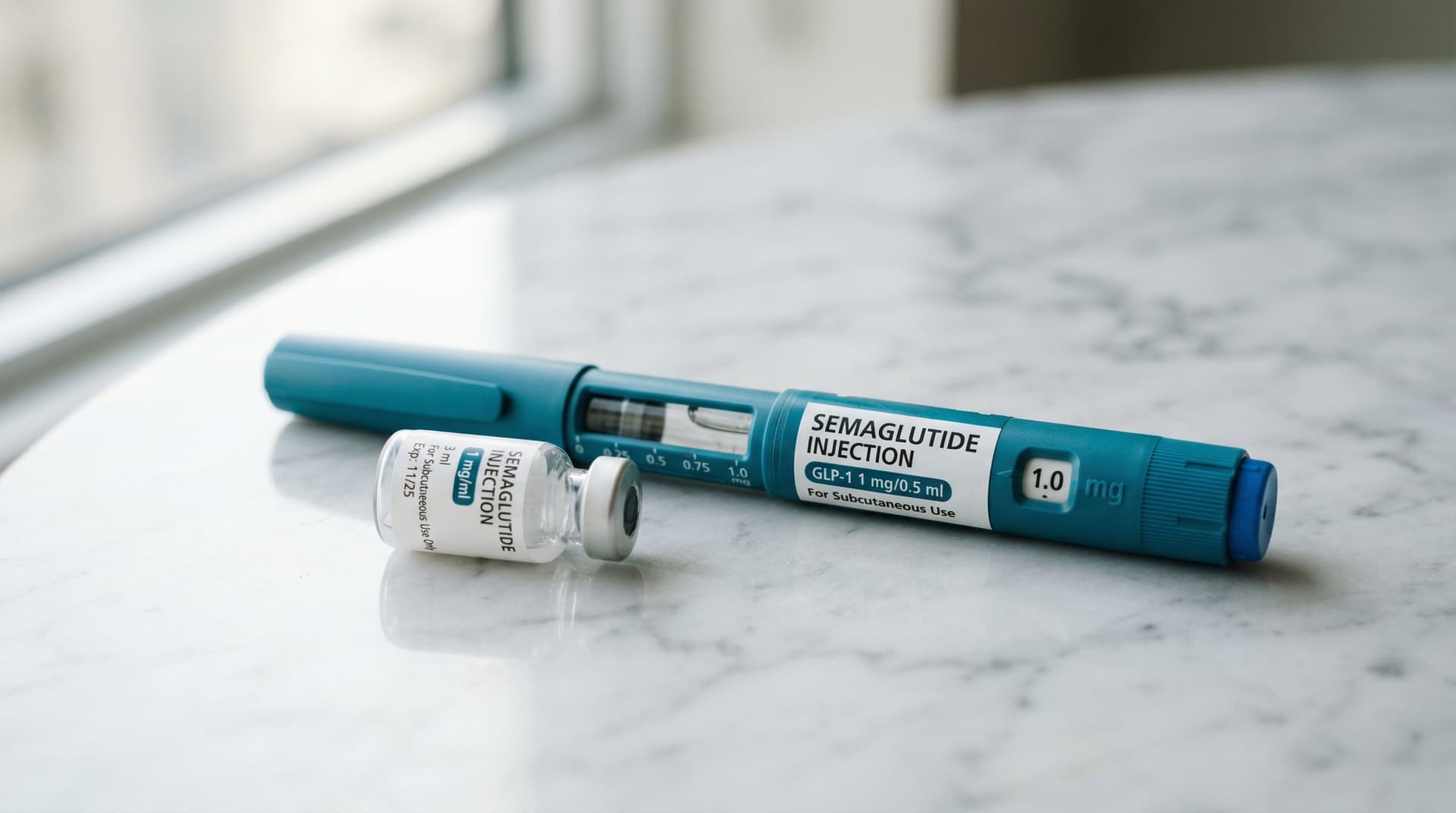
GLP-1 medications — Ozempic, Wegovy, Mounjaro, Zepbound, and compounded semaglutide or tirzepatide — are injected just under the skin (subcutaneously), once a week, into one of three areas: the abdomen (at least 2 inches / 5 cm from your navel), the front or outer thigh, or the back of the upper arm. You rotate the site each week so the same patch of skin never takes every dose. Here's exactly where and how to inject — for both prefilled pens and vial-and-syringe — how to make it nearly painless, and the mistakes that trip people up.
Important: this is general educational information, not medical advice. Always follow your prescriber's directions and the Instructions for Use (IFU) that came with your specific pen or medication — devices differ, and your provider's guidance overrides anything here.
Where do you inject a GLP-1 medication?
Inject into the fatty tissue just under the skin at one of three sites: the abdomen (avoiding a 2-inch circle around the navel), the front or outer thigh, or the back of the upper arm. Every GLP-1 injectable — brand pens and compounded vials alike — goes in the same places, because they're all subcutaneous injections.
- Abdomen — the most popular site; easy to reach with reliable absorption. Stay at least 2 inches (5 cm) from the belly button.
- Front or outer thigh — easy to self-inject; use the fleshy area, not the inner thigh or directly over bone.
- Back of the upper arm — good absorption but hard to reach yourself, so it usually needs another person to help.
Avoid injecting into scars, stretch marks, moles, bruises, or skin that's red, tender, hard, or swollen.
How do you inject a GLP-1 pen (Ozempic, Wegovy, Mounjaro, Zepbound) step by step?
Wash your hands, let the pen reach room temperature, pick and clean a site, confirm your prescribed dose, pinch the skin if you're lean, insert the needle straight in at 90 degrees, press and hold until the dose finishes, then dispose of the needle in a sharps container. Exact steps vary by device, so follow your pen's IFU — but the general sequence is:
1. Wash your hands and gather your pen, a new needle (if your pen uses removable ones), an alcohol swab, and a sharps container. 2. Let a refrigerated pen sit ~15–30 minutes to reach room temperature — cold injections sting more. 3. Inspect the medication — it should be clear and colorless; don't use it if it's cloudy or has particles. 4. Attach a new needle (if applicable) and prime / check flow per your IFU. Use a fresh needle every time. 5. Choose and clean your site with an alcohol swab; let it dry fully. 6. Confirm your prescribed dose on the pen — never guess or change it; follow your prescription. 7. Pinch a fold of skin (helpful if you're lean), insert the needle at 90 degrees, press the button, and hold for about 6 seconds (or as your IFU states) so the full dose delivers. 8. Remove the needle and release the pinch, then press gently with gauze — don't rub. 9. Dispose of the needle in an FDA-cleared sharps container — never the household trash.
How do you inject compounded semaglutide or tirzepatide from a vial?
Compounded GLP-1s usually come as a vial plus insulin syringes: you draw up your prescribed number of units, then inject subcutaneously at the same sites and 90-degree angle as a pen. The medication and technique are the same; only the delivery device differs.
1. Wash your hands; wipe the vial's rubber top with alcohol. 2. Draw air into the syringe to your prescribed unit mark, inject it into the vial, then draw up your exact prescribed dose (your provider tells you the units — never estimate). 3. Tap out any air bubbles and expel them. 4. Clean your chosen site, pinch if lean, insert at 90 degrees, push the plunger slowly and steadily, then withdraw. 5. Dispose of the syringe in a sharps container.
Your telehealth provider should walk you through the exact units and technique the first time — if a program won't, treat that as a red flag. The verified programs on our best providers list include clinician support for exactly this.
How do you rotate injection sites?
Use a different spot each week and never reuse the exact same location — rotating prevents lipohypertrophy, the lumpy, thickened fat that absorbs medication unevenly. A simple system: pick one region (say, the abdomen), move around it like a clock staying at least an inch from your last injection, then switch regions periodically. Since GLP-1s are weekly, many people cycle left abdomen, right abdomen, left thigh, right thigh, and so on.
Which injection site is best?
All three sites work; the abdomen is the most common self-injection choice because it's easy to reach and absorbs reliably — but the "best" site is whichever you can inject cleanly and rotate consistently. Absorption differences between sites are minor for these once-weekly medications, so skin health and consistency matter more than chasing a single "best" spot.
Does injecting a GLP-1 hurt?
Most people feel little to nothing — the needles are very short and fine, similar to insulin needles. To minimize any sting: use the medication at room temperature, relax the muscle, use a fresh needle each time, let the alcohol dry fully before injecting, and push slowly and steadily. A brief pinch or mild soreness afterward is normal; significant pain, bleeding, or a growing lump is worth mentioning to your prescriber.
What are the most common injection mistakes?
The frequent ones: injecting cold medication, reusing needles, not rotating sites, injecting too close to the navel, and rubbing the site afterward. Also injecting into muscle instead of fat (go straight in at 90°, don't aim deep), skipping the room-temperature step, and skipping the sharps container. None are dangerous when avoided, and all are easy to fix.
Frequently asked questions
Where is the best place to inject Ozempic or Wegovy? The abdomen (at least 2 inches from the navel) is the most common and easiest self-injection site; the front/outer thigh and back of the upper arm also work. Rotate weekly.
Do you inject a GLP-1 into muscle or fat? Fat — it's a subcutaneous injection into the fatty layer just under the skin, not into muscle or a vein. Insert straight in at 90 degrees.
How often do you inject Ozempic, Wegovy, or Mounjaro? Once a week, the same day each week. Compounded semaglutide and tirzepatide are also typically weekly. (Foundayo/orforglipron is the exception — it's a daily pill, not an injection.)
Can you inject in the same spot every week? No — rotate to a different spot each week to prevent lumpy scar tissue (lipohypertrophy) that can affect how the medication absorbs.
Does the injection hurt? Usually very little. Room-temperature medication, a fresh fine needle, and injecting slowly make it nearly painless for most people.
How do you dispose of the needles? In an FDA-cleared sharps container — never loose in household trash. Many pharmacies and communities offer sharps drop-off programs.
Bottom line
Injecting a GLP-1 is simpler than most people expect: room-temperature medication, one of three sites (abdomen, thigh, or upper arm), straight in at 90 degrees, rotate weekly, and into a sharps container afterward. Whether you use a brand pen or a compounded vial, the technique is the same — and your prescriber or telehealth provider should walk you through it the first time.
If you're choosing a program and want one that provides clear injection guidance and clinician support, compare the verified options on our best GLP-1 providers list. Always defer to your device's Instructions for Use and your prescriber over any general guide.