

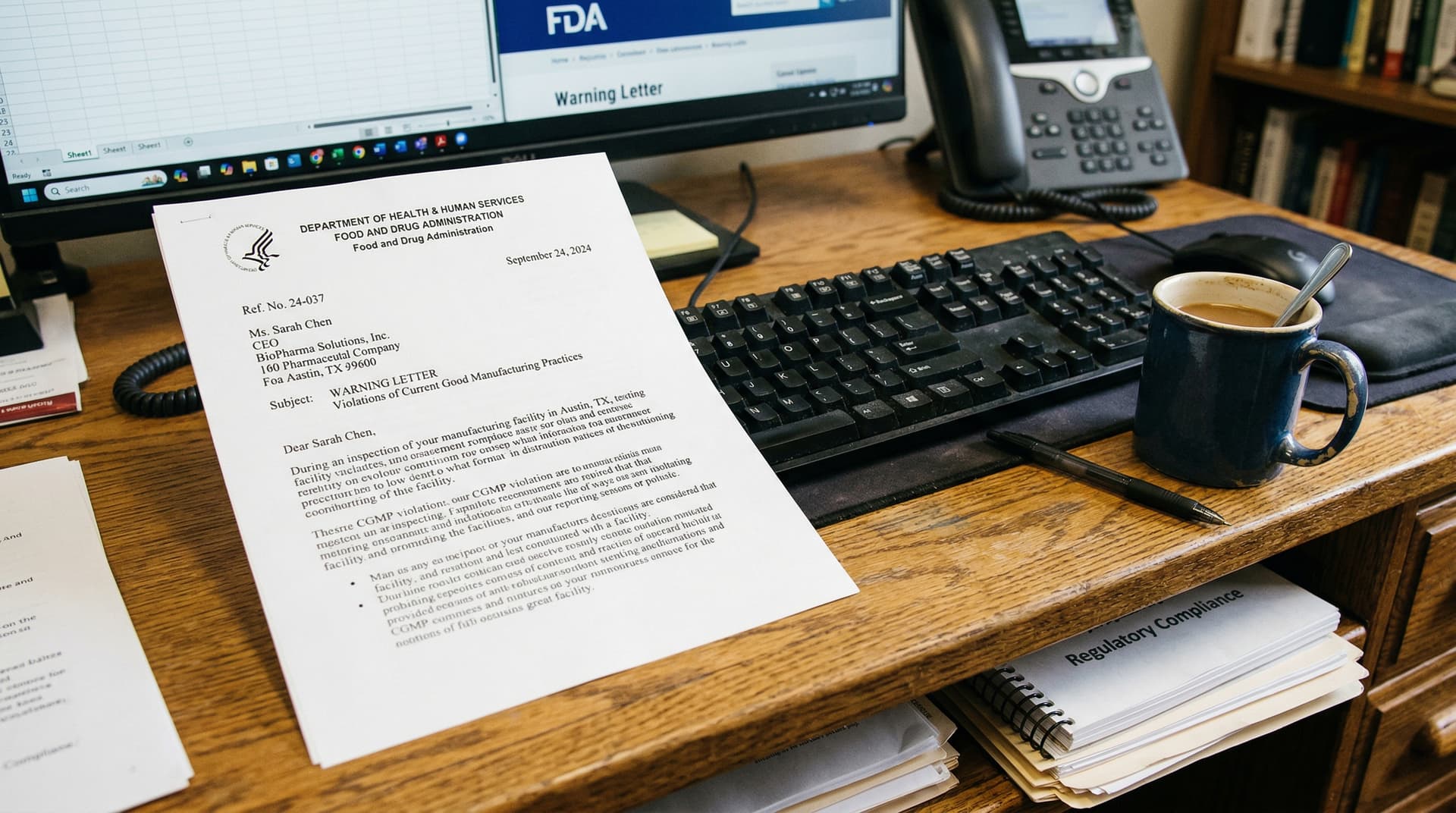
The FDA's enforcement campaign against unauthorized GLP-1 compounding pharmacies intensified significantly this month, with 12 new warning letters issued in April 2026 alone. This brings the total number of FDA enforcement actions against GLP-1 compounders to over 50 since the crackdown began in late 2024.
Who Got Flagged This Month
The April 2026 warning letters targeted compounding pharmacies across eight states. The FDA cited violations ranging from producing compounded semaglutide and tirzepatide without valid prescriptions, to using ingredients from unregistered bulk drug substance suppliers, to marketing compounded products with claims that implied FDA approval.
Several of the flagged companies were operating as 503A pharmacies — state-licensed compounding pharmacies that are supposed to fill individual prescriptions. The FDA found evidence that these pharmacies were operating more like manufacturers, producing large batches of compounded GLP-1 medications for distribution through telehealth platforms without the individual patient evaluations required by law.
Why the Crackdown Is Accelerating
The timing is not coincidental. Three factors are driving the FDA's increased enforcement:
The semaglutide shortage officially ended. The FDA removed semaglutide from its drug shortage list in early 2025, which eliminated the legal basis that many compounders had relied on. Under federal law, compounding pharmacies (specifically 503B outsourcing facilities) can produce copies of commercially available drugs only when those drugs are on the FDA shortage list. Once Novo Nordisk confirmed adequate supply of Ozempic and Wegovy, the legal protection evaporated.
Tirzepatide followed. Eli Lilly resolved the Mounjaro and Zepbound supply constraints in late 2025, and tirzepatide was removed from the shortage list shortly after. This closed the door for compounded tirzepatide as well.
Adverse event reports are rising. The FDA has received over 200 adverse event reports linked to compounded GLP-1 products since 2024. While most involve expected side effects like nausea, several cases involved sterility failures, incorrect dosing, and contamination — the exact risks that FDA regulation is designed to prevent.
What This Means for Current Compounded GLP-1 Users
If you are currently using a compounded semaglutide or tirzepatide product, you should understand the regulatory reality: your pharmacy is operating in a legal gray zone that is shrinking rapidly. This does not mean your medication is necessarily unsafe, but it does mean:
1. Your supply could be disrupted without warning. When the FDA issues a warning letter, the pharmacy typically has 15 business days to respond. If the response is inadequate, the FDA can seek an injunction to shut down production.
2. Quality controls vary wildly. Unlike FDA-approved manufacturers, compounding pharmacies are not required to conduct the same rigorous testing for potency, sterility, and stability. Some do excellent work; others cut corners.
3. You have alternatives. Brand-name Wegovy and Zepbound are now widely available. Prices have come down through manufacturer savings programs, and the Medicare Bridge program launches in July. Several telehealth providers also offer legitimate access to FDA-approved GLP-1 medications at competitive prices.
The Compounding Industry's Response
The compounding pharmacy industry has pushed back aggressively, arguing that they serve an important role in providing affordable access to medications. Several industry groups have filed legal challenges to the FDA's enforcement actions, and at least two cases are pending in federal court.
The core legal question is whether the FDA's shortage list determinations — which effectively control whether compounders can legally produce copies of brand-name drugs — are subject to judicial review. The outcome of these cases could reshape the regulatory landscape for years.
Our Recommendation
We have consistently advised consumers to prefer FDA-approved medications when they are available and accessible. The compounding crackdown reinforces this position. If you are currently on a compounded GLP-1, talk to your provider about transitioning to an FDA-approved brand — especially if you are Medicare-eligible and can take advantage of the Bridge program starting in July.